




Sharing Kindness This Season by Caring for Yourself and Others
The season ahead can bring warmth, busy calendars, mixed emotions, and a quiet pressure to do more than anyone can reasonably manage. There may be meals to plan, people to visit, gifts to choose, work to finish, and traditions to keep. Even joyful seasons can become heavy when kindness is treated like another task.
Real kindness does not have to be grand. It often looks like a warm meal saved for someone, a text sent at the right moment, a ride offered without keeping score, or an honest pause before saying yes to one more thing. It also looks like resting when the body is tired, asking for help, and speaking to yourself with the same patience you would offer a friend.
This season, caring for others and caring for yourself can belong together. One makes the other stronger. When people share what they have, whether it is time, food, attention, money, skills, or simple presence, generosity becomes less about performance and more about connection.

Kindness begins with how you treat yourself
Many people find it easier to be gentle with others than with themselves. A friend can cancel plans and receive understanding. A neighbor can need help and receive compassion. Yet when personal energy runs low, the inner voice can become sharp.
Self-kindness is not selfish. It is a steady way to protect the part of you that gives, listens, works, and loves. When that part becomes worn down, even good intentions can start to feel like obligations.
A kind check-in can be brief. It does not require a long morning routine or a perfectly quiet house. It can begin with a few honest questions:
What do I actually have the energy for today?
What can wait without causing real harm?
Have I eaten, rested, or stepped outside recently?
Am I saying yes because I want to, or because I feel guilty?
What would I say to someone I love if they felt this way?
The answers may be simple. Drink water. Take a short walk. Let the laundry wait. Buy the pie instead of baking one from scratch. Leave an event early. Ask someone else to bring a side dish.
These choices may sound small, but they help turn the season from a test of endurance into a time that can be lived with more care.
Rest is not the opposite of generosity. It often makes generosity possible.
Sharing what you have is not only about money
During giving seasons, conversations often focus on buying. Gifts, donations, travel expenses, meals, and decorations can all add up. For some households, giving money is possible and meaningful. For others, budgets are tight, and the pressure to spend can create shame.
Kindness should never be measured only in dollars.
People can share in many ways, and each one can matter. A person with extra food can bring a meal. A person with a reliable car can offer a ride. A person with patience can listen. A person with strong hands can shovel a walkway, carry groceries, or help set up chairs. A person with a little free time can sit with someone who does not want to be alone.
Sharing what you have starts with noticing what is already within reach.
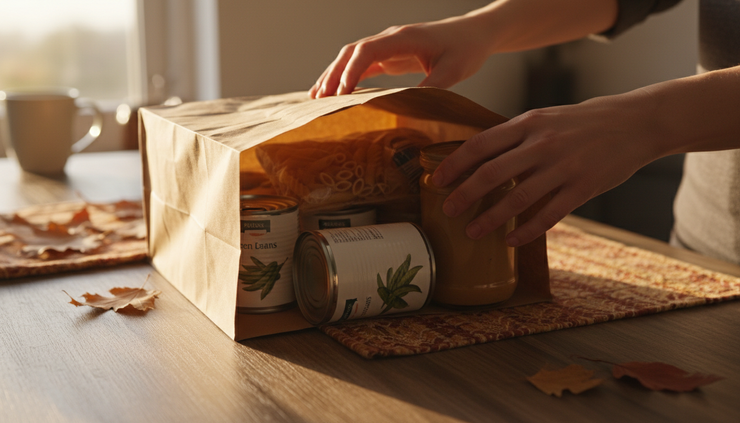
Maybe there is a pantry shelf with extra canned goods. Maybe there are coats that no longer fit. Maybe there are books a child has outgrown, baking supplies that can become cookies, or a skill that could save someone else time. A person who knows how to repair a loose button, fill out a form, wrap a gift, or cook a simple meal has something useful to offer.
Giving from what is already available keeps kindness grounded. It also helps avoid the quiet resentment that can grow when giving becomes too expensive, too rushed, or too far beyond capacity.
A helpful question is: what can be shared freely without creating hardship at home?
That question does not limit kindness. It protects it.
Small acts can carry a lot of care
The most memorable kindness is often specific. It says, “I see you,” without needing many words.
A generic offer like “Let me know if you need anything” can be kind, but it also asks the other person to identify a need, reach out, and risk feeling like a burden. A specific offer is easier to accept.
Try simple, concrete gestures:
“I’m going to the store this afternoon. I can pick up milk, bread, or medicine.”
“I made extra soup. I can leave some on your porch.”
“I can watch the kids for an hour while you rest.”
“I’m free Saturday morning if you want help with leaves.”
“I’ll call you after dinner, and you do not have to be cheerful.”
Small acts also work well because they fit real life. Not everyone can organize a major event or spend hours volunteering. Many people can do one kind thing in the middle of an ordinary day.
A handwritten note can sit on a fridge for weeks. A sincere compliment can soften a hard morning. A quiet apology can repair tension. A check-in text can remind someone that they have not been forgotten.
During the season ahead, people may be carrying grief, financial strain, family conflict, health worries, loneliness, or exhaustion. These burdens are not always visible. A little gentleness can meet needs that no one has spoken out loud.
Kindness does not have to solve everything to matter. Sometimes it simply helps someone get through the day.
Boundaries keep kindness healthy
Being kind does not mean being available to everyone at all times. It does not mean ignoring limits, tolerating harmful behavior, or saying yes while silently falling apart.
Healthy kindness has boundaries.
A boundary might sound like:
“I can come for dessert, but I cannot stay the whole evening.”
“I’m not able to host this year.”
“I can help for one hour.”
“I care about you, and I am not the right person for this conversation tonight.”
“I need a quiet day before we travel.”
These statements can feel uncomfortable at first, especially for people who are used to keeping peace by overextending themselves. Yet clear boundaries often prevent confusion and hurt feelings later. They let others know what is possible instead of forcing them to guess.
Boundaries also make room for more honest giving. When a person says yes within their true limits, the yes becomes cleaner. There is less bitterness attached to it.
This matters in family settings, where old roles can appear quickly. One person may become the automatic host. Another may become the driver, planner, cook, cleaner, peacemaker, or emotional support for everyone. If those roles feel heavy, this season can be a chance to share the load.
A simple sentence can help: “I can do this part, but I need help with the rest.”
Kindness grows stronger when responsibility is shared.

Make room for people who experience the season differently
The upcoming season will not feel the same for everyone. For some, it may bring celebration and reunion. For others, it may bring the first holiday without someone they love, the stress of travel, the ache of distance, or the pressure of complicated family dynamics.
Kindness asks people to leave room for different experiences.
That can mean lowering assumptions. Not everyone wants to attend every gathering. Not everyone drinks alcohol, eats the same foods, exchanges gifts, prays the same way, or feels happy in crowded rooms. Not everyone has family nearby. Not everyone feels safe or welcome going home.
Inclusive kindness can be very practical:
Ask about food needs without making it awkward.
Offer nonalcoholic drinks without calling attention to them.
Let people step away from loud rooms.
Avoid pushing questions about relationships, children, jobs, money, or body changes.
Invite someone without pressuring them to explain if they decline.
Remember those who are grieving after the main wave of sympathy has passed.
Sometimes the kindest thing is to give people choices. A choice of where to sit. A choice to bring something or simply show up. A choice to leave early. A choice to talk or stay quiet.
When people feel free to be honest, gatherings become more welcoming. The goal is not a perfect event. The goal is a table, room, or conversation where people can breathe.
Turn generosity into a simple seasonal rhythm
Kindness becomes easier when it is built into ordinary routines. Instead of waiting for a perfect moment, it can become part of how the season moves.
A weekly rhythm might look like this:
Care for yourself
Care for someone close
Care for the wider community
Care for the home
Plan one pocket of rest before the week fills up.
Send a check-in or offer one specific kind of help.
Share food, clothing, time, or money in a way that fits your means.
Simplify one task that has become more stressful than meaningful.
This rhythm does not need to be strict. It is a guide, not a scoreboard. Some weeks will allow more giving. Some weeks will call for more rest.
A useful practice is to choose one “enough” for the season. That might be:
One meaningful gathering instead of several rushed ones
One donation drive instead of many scattered efforts
One family tradition kept with care
One afternoon set aside for baking, cards, or calls
One quiet night each week with no plans
Choosing “enough” helps protect the heart of the season. It also reduces the urge to compare. Someone else’s decorations, meals, trips, or gift lists do not have to set the standard.
The best standard is whether the season leaves room for care.
Let receiving be part of kindness too
Many people are more comfortable giving help than receiving it. Accepting help can stir up pride, guilt, or fear of being a burden. Yet receiving gives others a chance to practice kindness as well.
When someone offers help that is safe and sincere, it is okay to say yes.
“Yes, a meal would help.”
“Yes, I could use a ride.”
“Yes, please take that task.”
“Yes, I would like company.”
Accepting help does not erase independence. It honors connection. Everyone will have seasons of giving and seasons of needing support. Most lives include both, often at the same time.
Receiving graciously can be as simple as saying, “Thank you. That would mean a lot.” No long explanation is required. No apology has to come first.
This is part of Sharing Kindness This Season by Caring for Yourself and Others. Kindness moves in more than one direction. It is not a performance by the strong for the struggling. It is a shared practice among people who all need care in different ways.

A kinder season can start with one choice
A kind season does not require a full calendar, a large budget, or flawless emotional energy. It begins with one clear choice, repeated in small ways.
Pause before overcommitting. Share what is truly available. Notice who may need a specific offer. Let your home, plans, and conversations be a little more welcoming. Accept help when it comes. Rest before resentment takes root.
Kindness is not measured by how much a person can carry alone. It shows up in the way people make life lighter for one another, even briefly.
This season, let care move both outward and inward. Give what you can. Receive what you need. Keep the gestures simple enough to repeat. The kindness that lasts is often the kindness people can actually live.
This blog post was approved by Dr. Bonnie Bull
Comments